

Exploring Thread and Floss
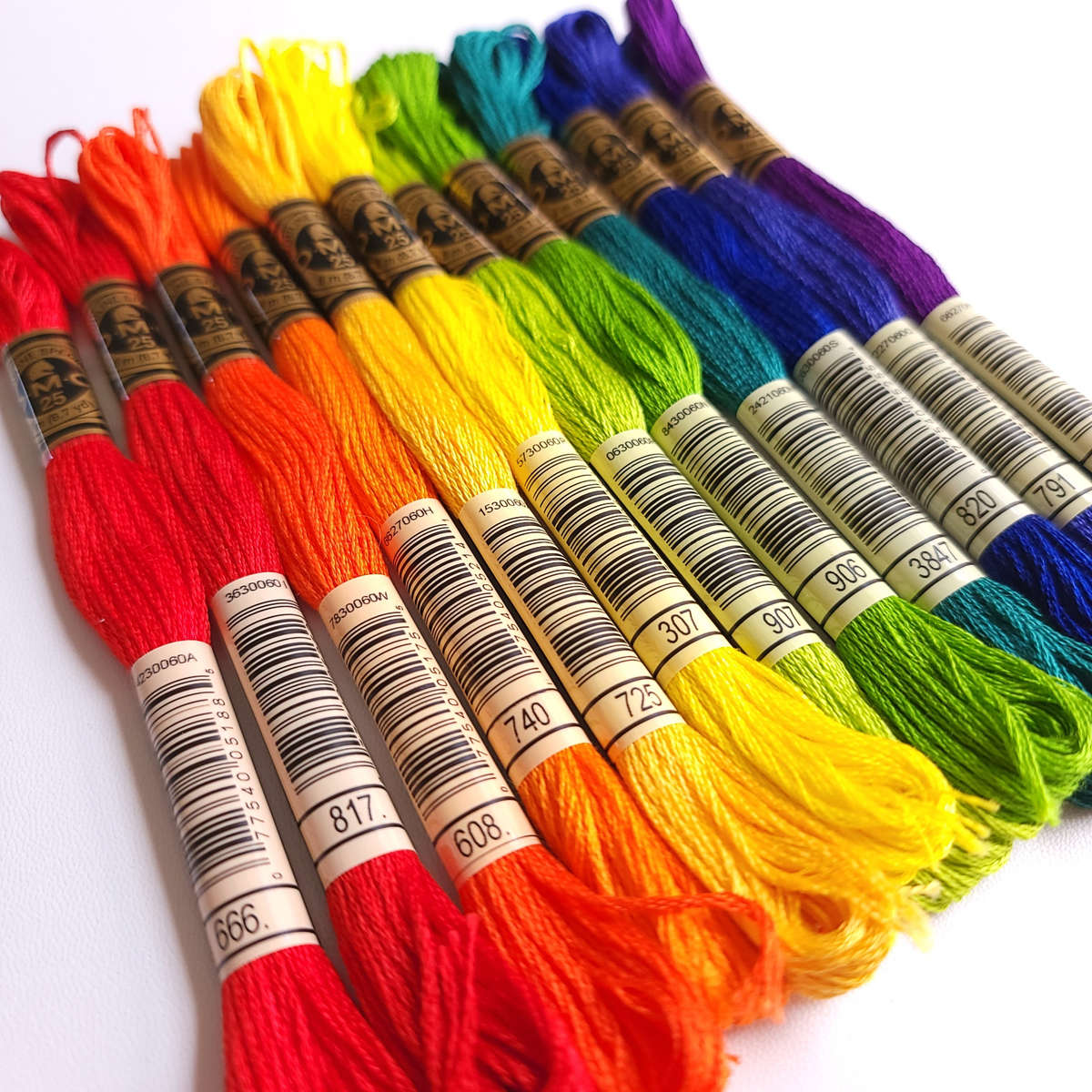
Your thread options for hand-embroidery are almost limitless. However, let's start with the basics. Most surface embroidery is done using 6-strand cotton embroidery floss. This floss consists of six individual strands twisted together. You can use it as it comes off the skein, with all six strands together, or separate it into individual strands and use any number of strands according to your preference.
DMC is one of the most popular brands of embroidery floss, and while I have no affiliation with them, I recommend it for all beginners. It offers good quality, is widely available, and has a fantastic selection of colors. To the best of my knowledge, all of their colors are colorfast.
I especially enjoy working with hand-dyed and overdyed six-strand floss. These options offer unique color possibilities, but they are not always colorfast, so they may bleed when washed or fade in sunlight. To prevent your projects from fading in the sun, display them out of direct sunlight or frame them behind UV-protective glass. If you're unsure whether your floss or fabric will bleed during washing, it's best to do a test first. Trust me, you don’t want to discover bleeding issues after you’ve completed your project. If you are feeling really adventurous, you can also dye your own floss (but I won't be covering that in this tutorial).
Once you're comfortable with embroidery and have completed your first few projects, you can explore a wide range of thread options. Some of these include 12wt cotton, pearl cotton, wool, silk, and metallic threads. While most patterns and kits typically recommend using 6-strand floss, experimenting with other threads can add unique elements and textures to your work.
In the getting started section, I will demonstrate how to properly use and separate 6-strand floss skeins.
DMC is one of the most popular brands of embroidery floss, and while I have no affiliation with them, I recommend it for all beginners. It offers good quality, is widely available, and has a fantastic selection of colors. To the best of my knowledge, all of their colors are colorfast.
I especially enjoy working with hand-dyed and overdyed six-strand floss. These options offer unique color possibilities, but they are not always colorfast, so they may bleed when washed or fade in sunlight. To prevent your projects from fading in the sun, display them out of direct sunlight or frame them behind UV-protective glass. If you're unsure whether your floss or fabric will bleed during washing, it's best to do a test first. Trust me, you don’t want to discover bleeding issues after you’ve completed your project. If you are feeling really adventurous, you can also dye your own floss (but I won't be covering that in this tutorial).
Once you're comfortable with embroidery and have completed your first few projects, you can explore a wide range of thread options. Some of these include 12wt cotton, pearl cotton, wool, silk, and metallic threads. While most patterns and kits typically recommend using 6-strand floss, experimenting with other threads can add unique elements and textures to your work.
In the getting started section, I will demonstrate how to properly use and separate 6-strand floss skeins.
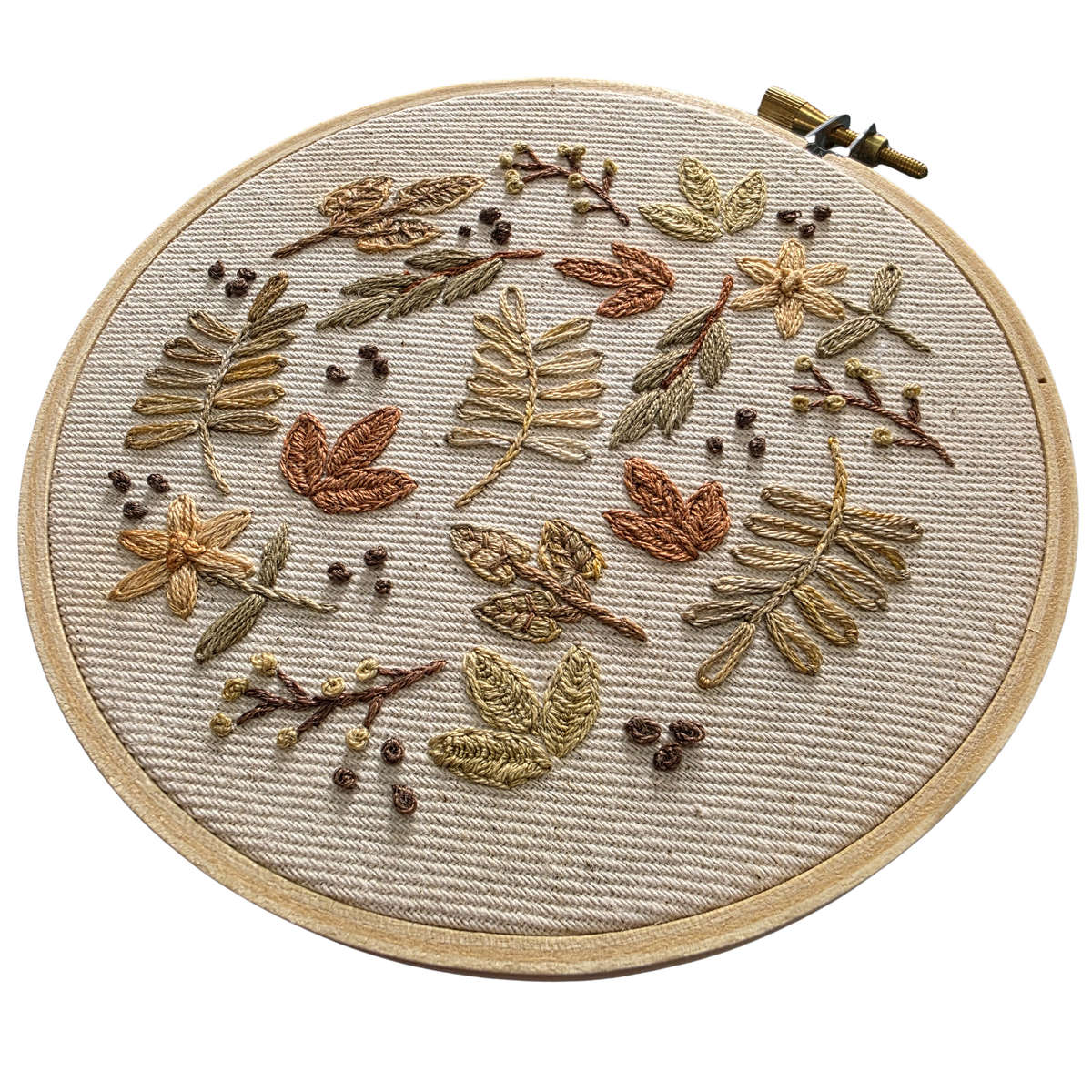
Forest Floor stitched with hand dyed floss made with all natural colorants.
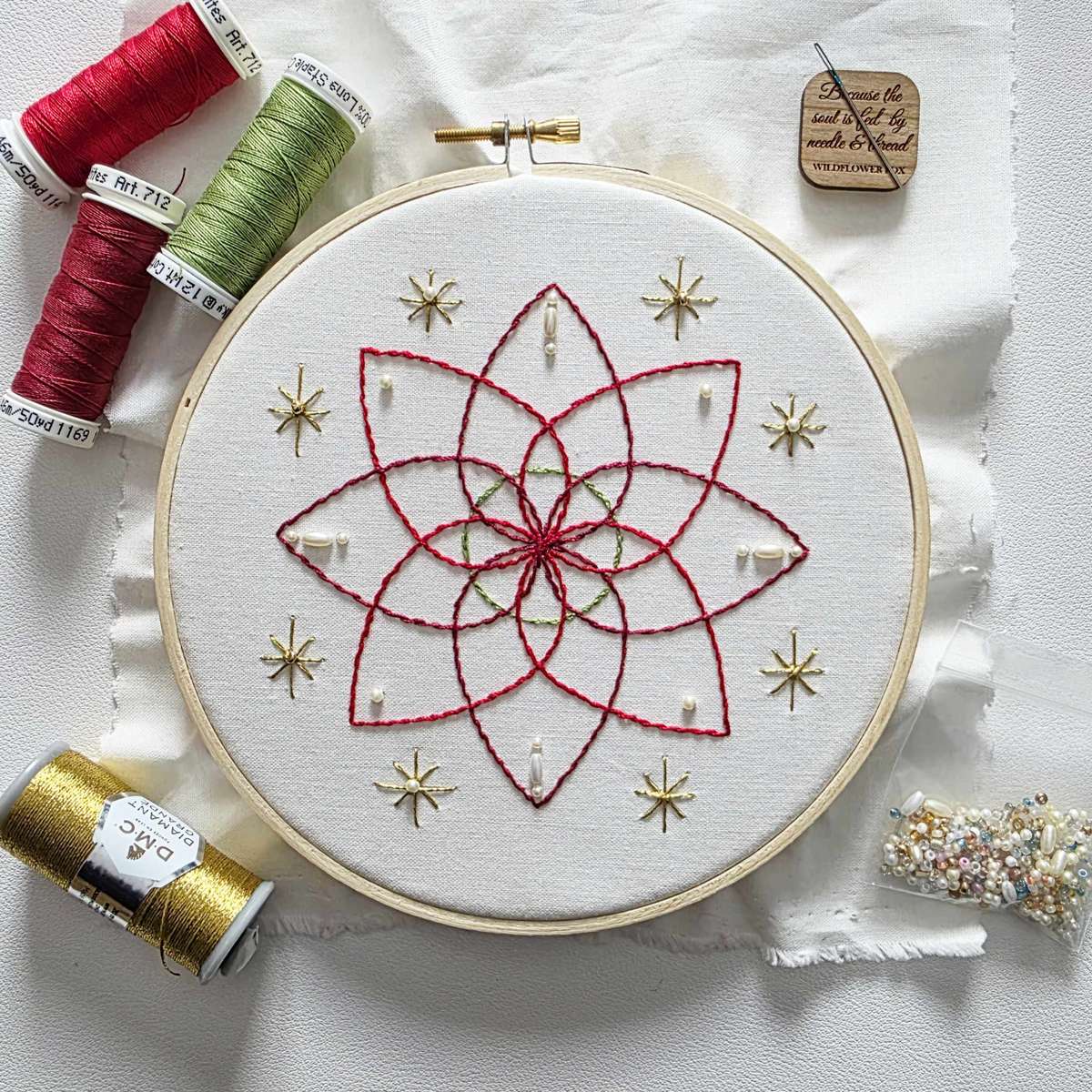
Winter Bloom stitched with Sulky 12wt cotton and metallic thread.


