
Choosing Fabric
Most embroidery is done on fabric, but your options are limited only by what you can get your needle through. If you're open to making holes, you can stitch on materials like paper, wood, or clay, among others. However, to keep it simple, this guide will focus on choosing the right fabric.
Embroidery is a broad term encompassing many different types and styles, some of which are associated with specific fabrics. For instance, cross-stitch is typically done on Aida cloth, while needlepoint is often done on an open-weave canvas. Even-weave linen is a good choice, and is recommended for many embroidery styles. For surface embroidery, cotton, linen, and wool felt are all excellent choices. You don't need to purchase new fabric; items like dish towels, cloth napkins, pillow covers, and clothing can serve as excellent canvases for your stitching projects.
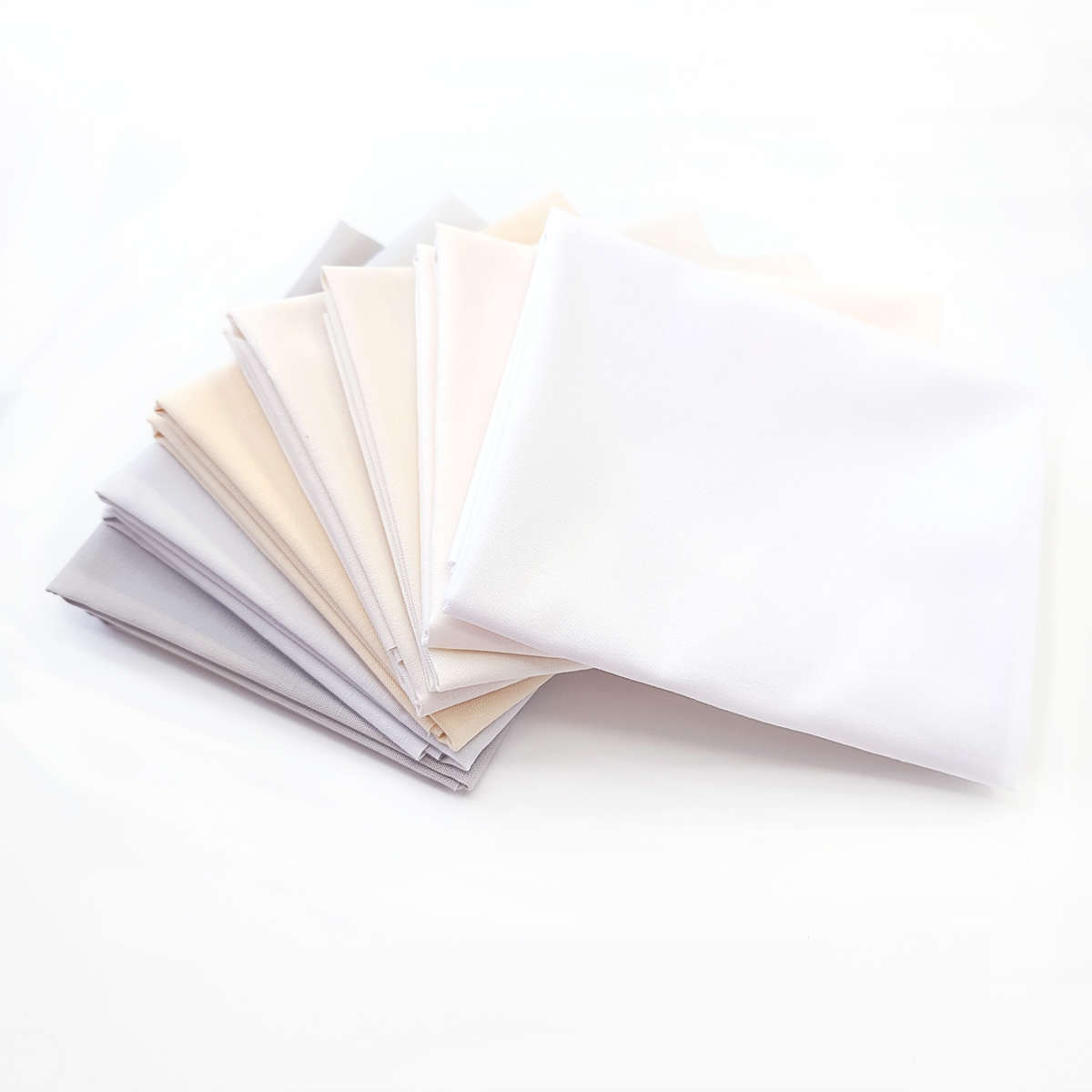
If you decide to purchase new fabric, I recommend starting with cotton, as it is easy to find and often budget-friendly. Look for high-quality quilting cotton. Embroidery enthusiasts often recommend Kona cotton, and it is one of my favorite fabrics. However, don't limit yourself to this recommendation. If you find a fabric you love that is too thin or sheer, you can always double it up. Even when using good quality fabric, I almost always double it up or use an iron-on stabilizer or interfacing on the back. This helps keep the fabric stable and your stitches looking crisp. Using a stabilizer or interfacing is helpful, but it can be harder to stitch through. Because of this, most people don't use them for hand embroidery. When doubling fabric, choose a solid color in the same shade as the top fabric or go with white for the back fabric.
For your first few projects, try to avoid stretchy materials. While cotton is a good choice for beginners, steer clear of stretchy fabrics, such as cotton knits (like t-shirts) or spandex. These materials can be stitched on, but their stretchiness can make them tricky to hoop. If the fabric isn't stretched slightly, your embroidery won't move with it. However, if stretched too much, your embroidery will pucker. Either way can leave you with unappealing embroidery.
Another important consideration is pre-washing your fabric, especially if you're working with items that will be washed occasionally. Any linens, garments, or quilt blocks should be pre-washed to ensure they are colorfast and preshrunk before you add embroidery. If the fabric shrinks after you stitch on it, the stitches will pull, creating wrinkles and puckers. I learned the hard way that not all dish towels are colorfast, meaning their colors can bleed, even those marketed for embroidery. I know it's exciting to start a new project, but always take the time to do the prep work.
Embroidery is a broad term encompassing many different types and styles, some of which are associated with specific fabrics. For instance, cross-stitch is typically done on Aida cloth, while needlepoint is often done on an open-weave canvas. Even-weave linen is a good choice, and is recommended for many embroidery styles. For surface embroidery, cotton, linen, and wool felt are all excellent choices. You don't need to purchase new fabric; items like dish towels, cloth napkins, pillow covers, and clothing can serve as excellent canvases for your stitching projects.
If you decide to purchase new fabric, I recommend starting with cotton, as it is easy to find and often budget-friendly. Look for high-quality quilting cotton. Embroidery enthusiasts often recommend Kona cotton, and it is one of my favorite fabrics. However, don't limit yourself to this recommendation. If you find a fabric you love that is too thin or sheer, you can always double it up. Even when using good quality fabric, I almost always double it up or use an iron-on stabilizer or interfacing on the back. This helps keep the fabric stable and your stitches looking crisp. Using a stabilizer or interfacing is helpful, but it can be harder to stitch through. Because of this, most people don't use them for hand embroidery. When doubling fabric, choose a solid color in the same shade as the top fabric or go with white for the back fabric.
For your first few projects, try to avoid stretchy materials. While cotton is a good choice for beginners, steer clear of stretchy fabrics, such as cotton knits (like t-shirts) or spandex. These materials can be stitched on, but their stretchiness can make them tricky to hoop. If the fabric isn't stretched slightly, your embroidery won't move with it. However, if stretched too much, your embroidery will pucker. Either way can leave you with unappealing embroidery.
Another important consideration is pre-washing your fabric, especially if you're working with items that will be washed occasionally. Any linens, garments, or quilt blocks should be pre-washed to ensure they are colorfast and preshrunk before you add embroidery. If the fabric shrinks after you stitch on it, the stitches will pull, creating wrinkles and puckers. I learned the hard way that not all dish towels are colorfast, meaning their colors can bleed, even those marketed for embroidery. I know it's exciting to start a new project, but always take the time to do the prep work.


